A single property listing with video receives 403% more inquiries than the same listing without one, according to data from the National Association of Realtors. Despite that number, fewer than 10% of active listings in the U.S. include any form of video content. The reason is straightforward: producing professional real estate video has traditionally required a videographer, a half-day shoot, and a budget that eats into the agent's commission before the first showing even happens.
AI-generated video is eliminating that bottleneck. Animated explainers, data-driven market updates, and personalized property walkthroughs can now be produced in minutes rather than weeks — at a fraction of the cost. For real estate professionals, this shift is not incremental. It is structural.
This guide breaks down six specific use cases where AI video is already changing how properties get marketed, how agents build their brand, and how brokerages scale their content operations.
1. Animated Property Listing Videos
Static photos dominate MLS listings, but they fail to communicate flow. Buyers cannot tell from a gallery of twelve images how the kitchen connects to the dining room, where natural light falls at 3 PM, or what the view looks like from the primary bedroom. Video solves this, and animated video solves it without requiring a physical shoot.
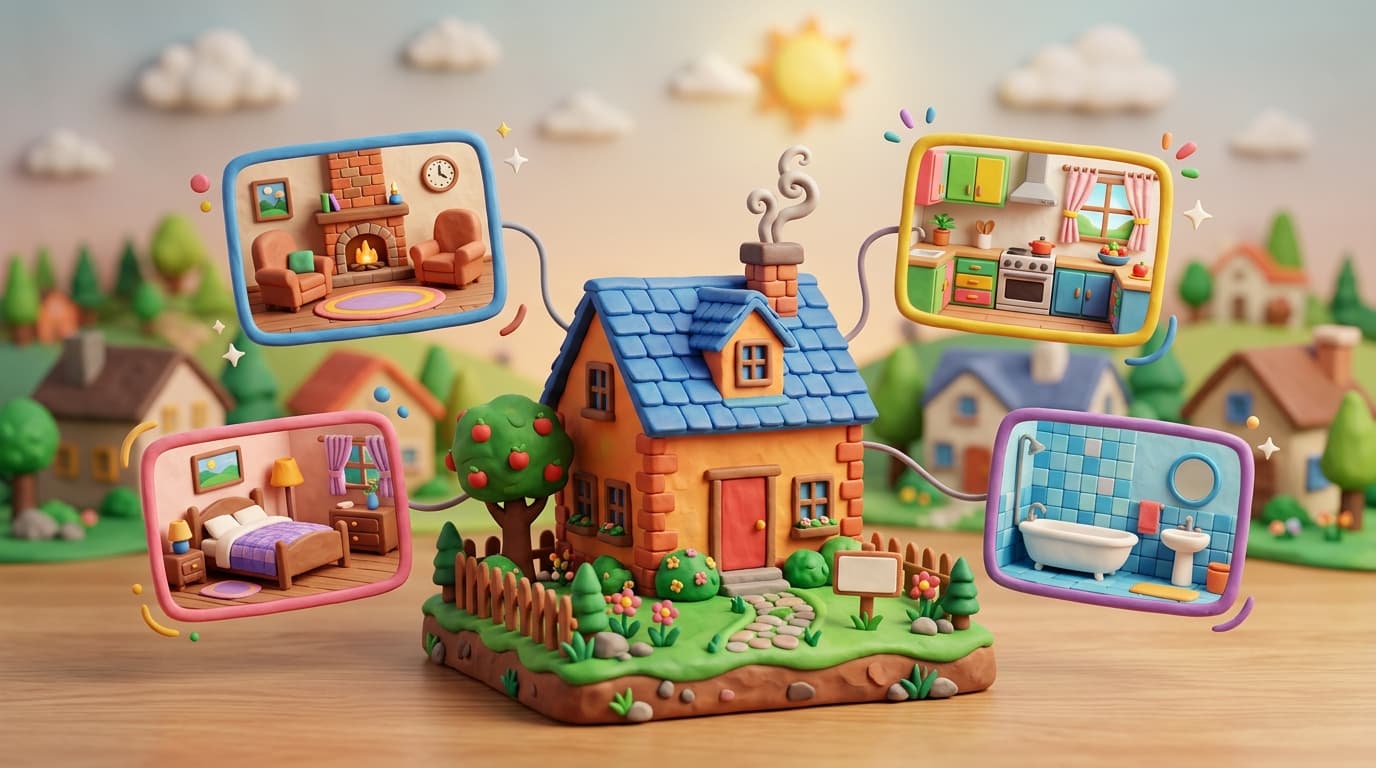
AI-powered animated listing videos can stitch together floor plan data, property photos, and listing details into a cohesive visual narrative. The result is a 60-to-90-second video that walks a viewer through the property's highlights, overlays key specs (square footage, lot size, year built), and ends with the agent's contact information.
Why this works for agents:
- Speed: A new listing can have a video ready within hours of going live, not days
- Consistency: Every listing gets the same professional treatment regardless of price point
- Cost: No photographer scheduling, no equipment, no post-production invoices
- Reach: Video listings perform dramatically better on Zillow, Realtor.com, and social feeds
The practical impact is measurable. Redfin reported in early 2026 that listings with embedded video sold an average of 12 days faster than comparable listings relying solely on photography. For a seller paying a mortgage on a vacant property, those 12 days translate directly into saved carrying costs.
Agents who previously reserved video for luxury listings above $1M can now afford to include it on every property in their portfolio.
2. Neighborhood and Community Guides
Buyers relocating from out of state — a cohort that grew 23% between 2024 and 2026 according to United Van Lines' annual migration study — face a specific information gap. They can evaluate a property online, but they struggle to evaluate the neighborhood. School ratings, commute times, walkability scores, and local amenities all matter, yet most listing pages present this information as a bulleted list buried below the fold.
Animated neighborhood guides turn that data into a visual story. An AI-generated video can overlay commute routes on a map, show proximity to grocery stores and parks, highlight school ratings with clean infographics, and include footage-style animations of the neighborhood's character — all narrated with a professional AI voiceover.
Where these videos fit in the sales process:
- Pre-showing outreach: Send a neighborhood guide before the buyer visits, so they arrive already informed and emotionally invested
- Listing page embeds: Complement the property video with a separate neighborhood video, giving the listing page two reasons to keep visitors engaged
- Social media content: Neighborhood guides perform exceptionally well on Instagram Reels and TikTok because they are useful to anyone considering the area, not just active buyers
The key advantage is reusability. A neighborhood guide for a specific ZIP code or school district can be used across dozens of listings. An agent working a farm area of 500 homes needs perhaps four or five neighborhood videos to cover their entire territory, and each one stays relevant for months.
This is a sharp contrast to property-specific videos that become obsolete the moment a listing closes. Neighborhood content builds long-term brand equity while simultaneously supporting active listings.
3. Market Update Reports
Every experienced agent knows the value of positioning themselves as a local market expert. Monthly or quarterly market update videos — showing median prices, days on market, inventory levels, and trend lines — are one of the highest-ROI content formats in real estate marketing. The problem, again, has been production.
Manually pulling data from MLS, formatting it into slides, recording a voiceover, and editing everything together takes hours. Most agents start strong, publish two or three market updates, then abandon the effort when listing appointments pile up.
AI video flips the economics. Feed current market data into an animated template and the output is a polished 90-second video with clean charts, trend arrows, and narration that contextualizes the numbers for a local audience.
The compounding effect of consistent market updates:
- SEO authority: Regular video content targeting "[city name] housing market" and "[ZIP code] real estate trends" builds organic visibility over time
- Email engagement: Market update videos embedded in monthly newsletters see 2-3x the click-through rate of text-only updates, according to Campaign Monitor's 2025 email benchmarks
- Referral generation: Homeowners who are not actively selling still watch market updates to track their equity — keeping the agent top-of-mind for when they do decide to list
Brokerages that systematize this process — assigning an AI video pipeline to pull data and generate videos automatically — can ensure every agent on the team publishes consistent market content without any individual agent spending time on production.
4. Client Onboarding and Process Explainers
Real estate transactions are complex. First-time buyers face a cascade of unfamiliar steps: pre-approval, earnest money, inspection contingencies, appraisal gaps, title insurance, closing disclosures. Agents spend significant time explaining these concepts — often repeating the same explanations across clients.
Animated explainer videos are the natural solution. A library of five to ten short videos covering common transaction milestones gives agents a resource they can share at exactly the right moment in the buying or selling process.
High-impact explainer topics for real estate:
- What happens between offer acceptance and closing
- How the home inspection process works and what to expect
- Understanding your closing costs breakdown
- The appraisal process explained in 60 seconds
- Seller net proceeds: how to estimate what you will walk away with
These videos serve a dual purpose. They educate the client, reducing anxiety and support calls. And they position the agent as organized and professional — the kind of agent who has their process dialed in tightly enough to have created educational content for every stage.
The SaaS onboarding playbook applies almost directly here. Replace "user activation" with "buyer confidence" and the framework translates: short, focused videos delivered at the moment of need, each one reducing friction in the client journey.
Tools like Lychee make it practical for individual agents to build this content library without a production team, generating animated explainers from a script in minutes.
5. Agent Personal Branding Videos
In a profession where 87% of buyers work with the first agent they contact (NAR 2025 Profile of Home Buyers and Sellers), being discovered first matters more than being the best. Video is the strongest lever for discovery because it dominates social algorithms and keeps viewers on-page longer.
Agent branding videos fall into several categories:
Introduction videos: A 60-second animated piece covering who the agent is, what areas they serve, and what clients can expect. This replaces the awkward selfie-style video that most agents default to and instead delivers a polished, brand-consistent message.
Just-sold recap videos: Animated case studies showing the listing price, sale price, days on market, and a brief narrative of the strategy. These function as video testimonials without requiring the client to appear on camera — a significant advantage given that most sellers prefer privacy.
Annual review videos: Year-end roundups showing total volume, average sale price, and market highlights. These are shareable content pieces that demonstrate track record without feeling like a sales pitch.
The consistent thread across all three is that animated AI video removes the biggest barrier to agent video adoption: the agent does not have to be on camera. A significant percentage of real estate professionals avoid video marketing entirely because they are uncomfortable filming themselves. Animated explainer-style video sidesteps this objection completely.
6. Open House and Event Promotion
Open houses remain one of the most effective lead generation tools in residential real estate, but promoting them effectively requires more than a listing syndication blast. A short animated video announcing the open house — showing the property highlights, the date and time, directions, and what makes the home special — outperforms static social posts by a wide margin.
Distribution channels for open house promo videos:
- Instagram Stories and Reels: Short vertical video with property highlights and event details
- Facebook Events: Video-enriched event pages generate higher RSVPs
- Agent email lists: Pre-event emails with embedded video drive 2-3x attendance versus text-only invitations
- Google Business Profile: Video posts on GBP listings increase local visibility
The production speed of AI video is particularly valuable here because open house decisions are often made on short timelines. An agent who gets a listing on Monday and hosts an open house on Saturday needs promotional content immediately. Waiting three to five days for a traditional videographer's turnaround defeats the purpose.
Beyond open houses, the same approach works for broker opens, community events, and client appreciation gatherings — any time-sensitive event where visual promotion drives attendance.
Implementation: Getting Started Without a Production Team
The barrier to entry for AI video in real estate is now effectively zero for agents willing to invest an afternoon in setup. Here is a practical starting framework:
Week 1: Create an animated listing video for your next new listing. Use it on the MLS, your website, and one social platform. Measure inquiries against your previous listing that had no video.
Week 2: Produce a neighborhood guide for your primary farm area. Share it organically and note engagement metrics.
Week 3: Generate your first monthly market update video. Send it to your database via email and post it on LinkedIn.
Week 4: Build two to three client education videos covering the most common questions you answer repeatedly. Start sharing them proactively during active transactions.
By the end of one month, you will have a content library of six to eight videos — more video content than most agents produce in an entire year. The right animation style for real estate tends toward clean motion graphics with data overlays rather than cartoon-style animation, which matches the professionalism buyers expect.
The Competitive Window Is Closing
Real estate professionals who adopt AI video now are operating in a window where the technology is mature but adoption is still low. That window will not stay open indefinitely. As more agents integrate AI video into their marketing stack, the competitive advantage shifts from "having video" to "having better video" — and eventually to "having video" simply being table stakes.
The agents and brokerages moving fastest are not waiting for the technology to improve further. They are building content libraries, testing distribution channels, and establishing themselves as the video-forward professionals in their market. In an industry where perception of expertise directly drives client acquisition, that positioning compounds over time.
The question for real estate professionals is not whether AI video will become standard in property marketing. NAR data, platform algorithms, and buyer behavior all point in the same direction. The question is whether you will be the agent in your market who adopted early — or the one who is still catching up.