Every startup founder knows the feeling. You visit a competitor's website — one that just raised a $20M Series B — and their homepage has a stunning 90-second product video. Professional voiceover. Cinematic transitions. Animated graphics that make their product look like the future. Your homepage has a screenshot and a tagline.
The video marketing gap between well-funded companies and early-stage startups has been one of the most persistent competitive disadvantages in tech. That gap is closing fast.
AI video generation has fundamentally changed the economics of video production. A bootstrapped founder can now create professional marketing videos that would have cost $10,000-$50,000 just two years ago — for a fraction of the price and in a fraction of the time. Here is how to make it work.
The Old Economics: Why Startups Could Not Compete
Traditional video production has always been expensive because it is labor-intensive and requires specialized skills at every stage.
A typical 60-second explainer video through a production agency costs $5,000 to $25,000. A polished product demo with motion graphics runs $8,000 to $30,000. A series of social media videos for a product launch? Budget $15,000 to $50,000.
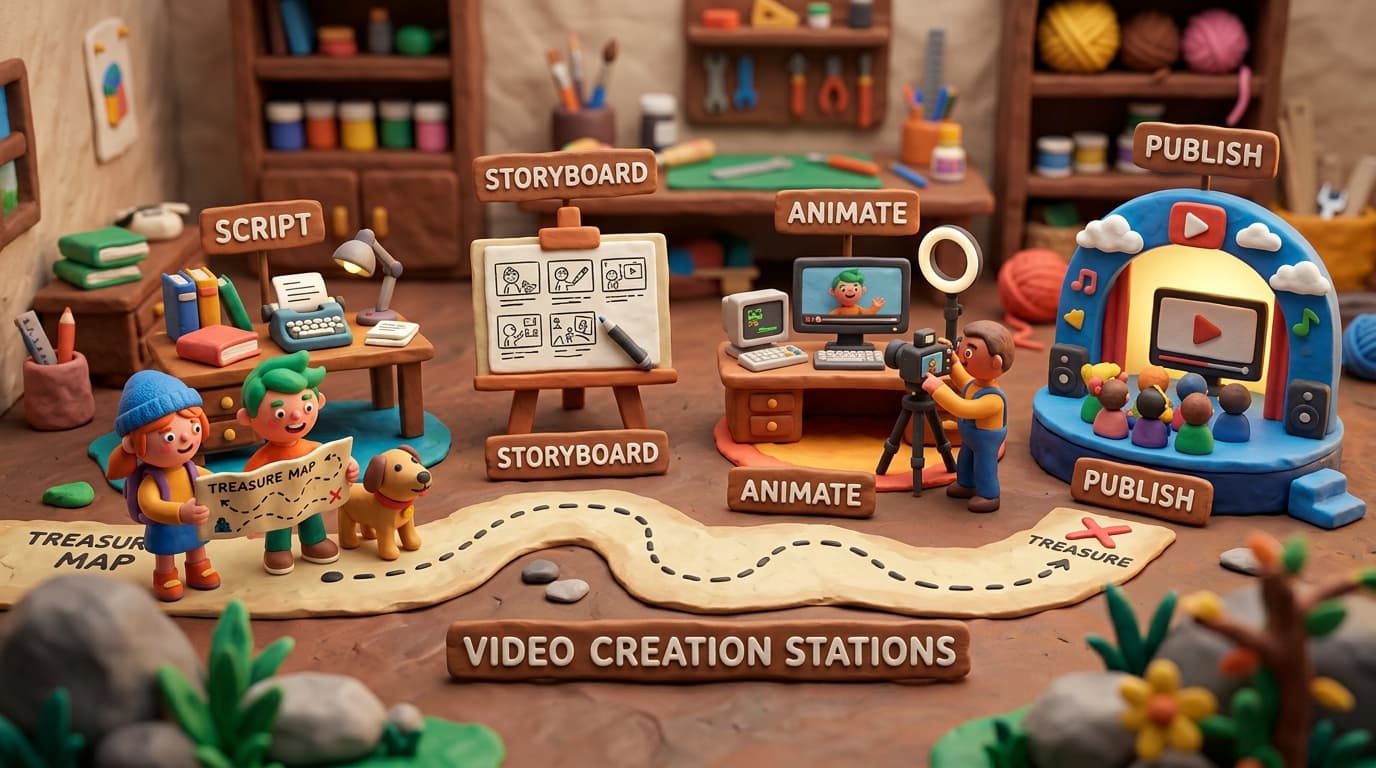
These numbers assume a standard workflow: scriptwriting, storyboarding, illustration or filming, animation, voiceover recording, sound design, editing, and revisions. Each step involves specialists billing $50-$200 per hour. Even "affordable" freelancers on platforms like Upwork typically charge $2,000-$5,000 for a basic explainer. For a full side-by-side comparison of costs, timelines, and quality tradeoffs, see our AI video vs traditional video production breakdown.
For a startup burning $30,000-$50,000 per month in total runway, spending $15,000 on video content is not just expensive — it is existential. So most startups simply go without, ceding an enormous engagement and conversion advantage to better-funded competitors.
The New Economics: AI Changes Everything
AI video generation compresses the production pipeline from weeks and thousands of dollars to hours and a modest subscription fee.
Here is a realistic cost comparison for a startup's first-quarter video content needs:
Traditional Production
| Content | Traditional Cost | Timeline | |---|---|---| | Homepage explainer (90 sec) | $12,000 | 3-4 weeks | | 3 product demo videos | $18,000 | 4-6 weeks | | 8 social media clips | $8,000 | 2-3 weeks | | 2 customer onboarding videos | $6,000 | 2-3 weeks | | Total | $44,000 | 8-12 weeks |
AI-Powered Production
| Content | AI Tool Cost | Timeline | |---|---|---| | Homepage explainer (90 sec) | ~$50-100 | 2-4 hours | | 3 product demo videos | ~$100-200 | 1 day | | 8 social media clips | ~$80-150 | 1 day | | 2 customer onboarding videos | ~$50-100 | 3-4 hours | | Total | $280-550 | 3-5 days |
The cost reduction is not 50% or even 90%. It is over 99%. And the time savings are equally dramatic, freeing your team to focus on product, sales, and the hundred other things that need attention at an early-stage company.
Five Video Use Cases Every Startup Needs
1. The Homepage Explainer
Your homepage video is often the first interaction a potential customer has with your product. It needs to answer three questions in under 90 seconds: What does this do? Who is it for? Why should I care?
AI excels at creating these because the format is well-defined and visual. Write a clear script that leads with the problem, introduces your solution, and shows key features in action. Use AI to generate the visuals — product interfaces, animated workflows, and context-setting scenes.
Pro tip: Create 2-3 versions with different opening hooks and test which one keeps visitors on the page longest. AI makes this kind of iteration trivially cheap.
2. Product Demos and Walkthroughs
Prospects who watch a product demo are 1.81 times more likely to convert than those who do not. But demo videos go stale fast — every UI update, new feature, or pricing change makes them outdated.
AI video solves the freshness problem. When you ship a new feature, generate an updated demo the same day. No need to coordinate with a production team or wait weeks for revisions. Your demos stay current with your product.
3. Pitch Deck Videos
Investors watch hundreds of pitches. A 60-second pitch video attached to your cold outreach or included on your fundraising page can dramatically increase engagement. VCs report that pitch emails with video receive 3x the response rate of text-only emails.
Use AI to generate a visually compelling narrative that covers your market opportunity, product, traction, and ask. The video does not need to replace your full pitch deck — it needs to earn the meeting.
4. Customer Onboarding
Reducing time-to-value is critical for early-stage products, and video onboarding sequences reduce support tickets by up to 50% compared to text-only documentation.
Create a short onboarding series: a welcome video, a getting-started walkthrough, and videos covering your 2-3 most important features. Update them as your product evolves.
5. Social Media Content
Startups that maintain a consistent social media video presence see 2.5x faster audience growth than those that rely on text and image posts alone. But producing social content consistently is a grind — especially when you are a team of 3-5 people doing everything. Our AI video social media strategy guide covers platform-specific tactics and posting cadences that work for lean teams.
AI video generation lets one person produce a week's worth of social content in a single morning. Product tips, industry insights, customer highlights, behind-the-scenes looks — all generated from prompts and refined in minutes.
Building a Video Content Engine With Limited Resources
You do not need a dedicated video team to maintain a professional video presence. Here is how a startup with zero video experience can build a sustainable content engine.
Week 1: Foundation
- Choose your AI video tool and learn its capabilities. Spend a few hours experimenting with prompts and understanding what it produces well.
- Write scripts for your three highest-priority videos: homepage explainer, main product demo, and a social media template.
- Generate, review, refine. Your first batch will require iteration. Note what works and what needs adjustment.
Week 2: Launch
- Publish your homepage video and product demo. Embed them with proper schema markup for SEO benefits.
- Create your first week of social content — aim for 3-4 videos across your active platforms.
- Set up analytics to track video engagement, play rates, and conversion impact.
Weeks 3-4: Cadence
- Establish a weekly creation rhythm. Dedicate 2-3 hours per week to batch-producing the next week's content.
- Create your onboarding video series and integrate it into your user activation flow.
- Start testing variations — different hooks, styles, lengths — and track what performs best.
Month 2 and Beyond: Scale
- Expand to new formats based on what is working. If product demos drive conversions, make more. If social content is building audience, increase cadence.
- Build a prompt library — save your best-performing prompts and scripts as templates for future content.
- Repurpose aggressively. Every long-form video should become 2-3 social clips. Every social clip that performs well should inform the next product demo or explainer.
Measuring ROI at Startup Scale
Startups cannot afford vanity metrics. Every marketing activity needs to tie back to growth. Here is how to measure video ROI pragmatically:
Leading Indicators (Track Weekly)
- Play rate: What percentage of page visitors actually play your videos? Below 20% means your thumbnail or placement needs work. Above 40% is strong.
- Watch-through rate: What percentage watch to the end? Below 50% suggests your video is too long or loses engagement in the middle.
- Social engagement rate: Likes, comments, shares, and saves as a percentage of views.
Lagging Indicators (Track Monthly)
- Conversion rate lift: Compare conversion rates on pages with and without video. Most startups see a 20-40% increase after adding video.
- Time on site: Video-enhanced pages should show meaningfully higher session duration.
- Pipeline influence: For B2B startups, track whether prospects who engage with video content move through the funnel faster or close at higher rates.
- Support ticket reduction: If you are using onboarding videos, measure the impact on common "how do I...?" support requests.
The Simple ROI Calculation
If your AI video tool costs $50/month and your homepage video increases trial signups by 25% — converting even one additional paying customer per month — the ROI is clear. For most startups, video pays for itself within the first week of use.
Scaling Video as You Grow
As your startup gains traction, your video needs will evolve. Here is how to scale intentionally:
Seed stage (1-5 people): One person handles all video using AI tools. Focus on homepage, demos, and basic social content. Budget: under $100/month in tooling.
Series A (10-30 people): Designate a content owner who uses AI for high-volume production and occasionally works with freelancers for premium brand pieces. Budget: $500-$2,000/month.
Series B and beyond (30+ people): Build a content team that uses AI as a force multiplier. AI handles the volume; humans handle the high-touch creative work. Budget: $5,000-$15,000/month — still a fraction of what you would spend without AI.
The key insight is that AI video does not replace human creativity as you scale — it amplifies it. The founder who learns to produce AI video at the seed stage builds intuitions about what works that become invaluable when they are leading a content team later.
Stop Waiting for the "Right Time"
The most common mistake startup founders make with video marketing is waiting. Waiting until the product is "ready." Waiting until there is budget for a "real" video. Waiting until the team is bigger.
Every day without video on your homepage, in your social feeds, and in your onboarding flow is a day of lost conversions, slower audience growth, and competitive disadvantage.
Lychee was built for exactly this moment — when you know you need video but thought you could not afford it. Try it free and create your first startup-quality video today. Your well-funded competitors will not know the difference.